At the start, the client essentially had no infrastructure:
- no working public website for the federation's needs;
- no tournament and protocol automation;
- no unified database of players and clubs;
- information about matches, lineups, and results was not collected in a single system.
In other words, it was not about redesigning an existing product, but about launching the digital environment for regional football from scratch.
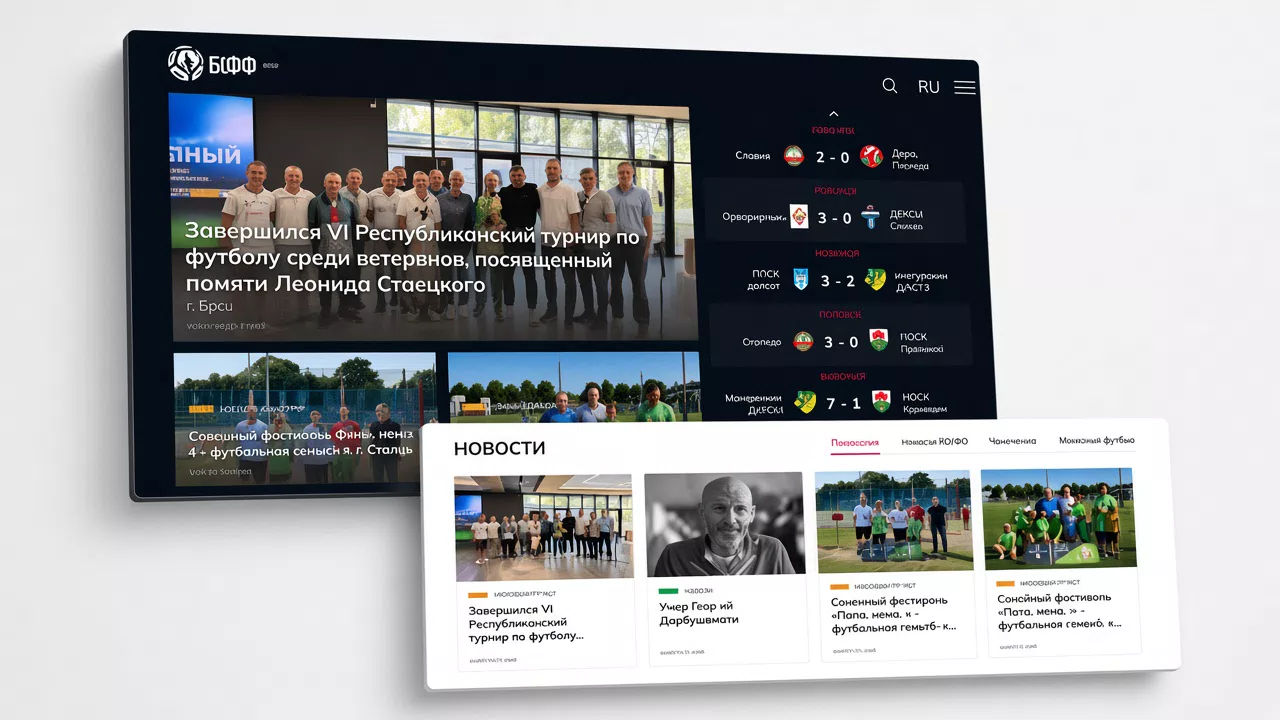
Why we didn't build everything from scratch
Understanding the scale, we immediately honestly assessed the risk: a full-fledged federation-level platform "from a clean slate" would be long, expensive, and excessive for a regional launch.
So we proposed a different path: collaboration with ABFF.
The idea was simple and engineering-sound:
- take as a basis the existing platform we had previously built for the Association of Belarusian Football;
- obtain ABFF's permission to use this base;
- remove everything unnecessary for Brest;
- adapt the product scope to the needs of the regional federation;
- on this foundation, assemble a working project for the regional stage of the Second League.
ABFF gave its consent. This allowed BOFF to get a mature architecture faster and cheaper, without losing control over its regional workflow.
What was implemented
The project consists of three interconnected layers.
1. Public website of the regional federation
The main digital showcase of ABFF (abff.by) was taken as the basis for the external website and rebuilt for BOFF's brand and needs.
The public side now features:
- a homepage with news, results, and media;
- a tournaments section (men's / women's);
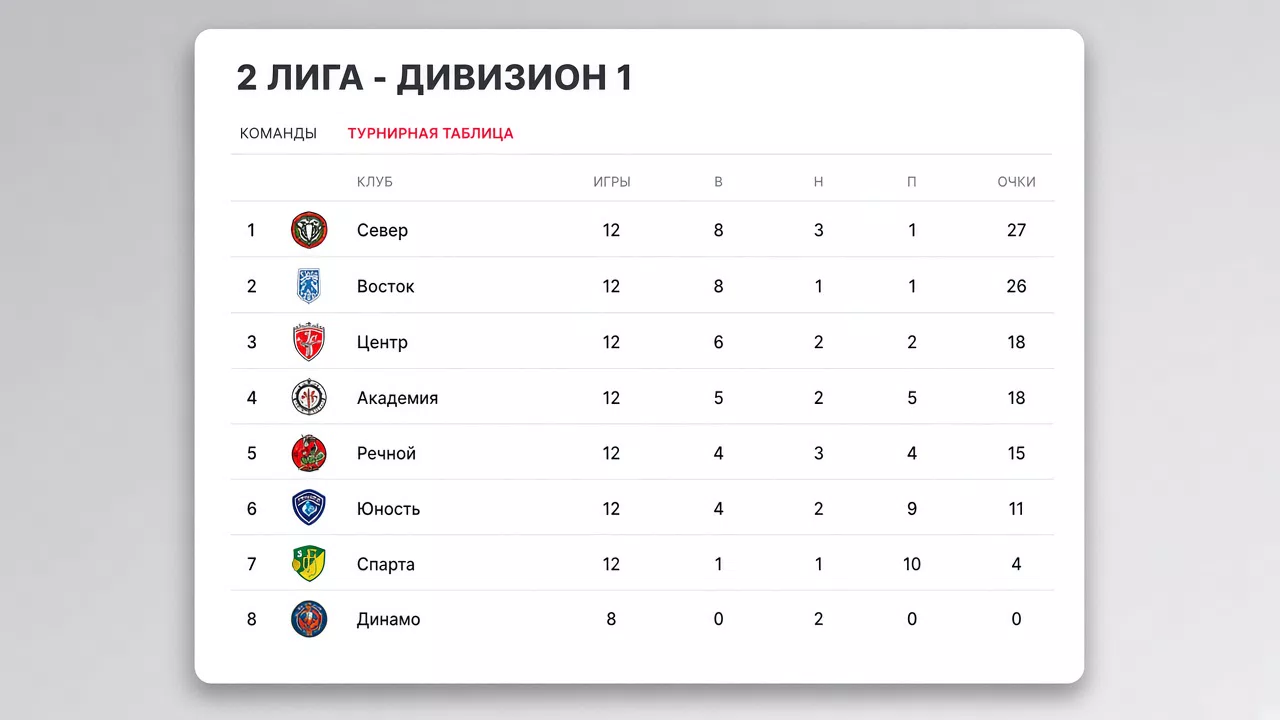
- standings and match lists;
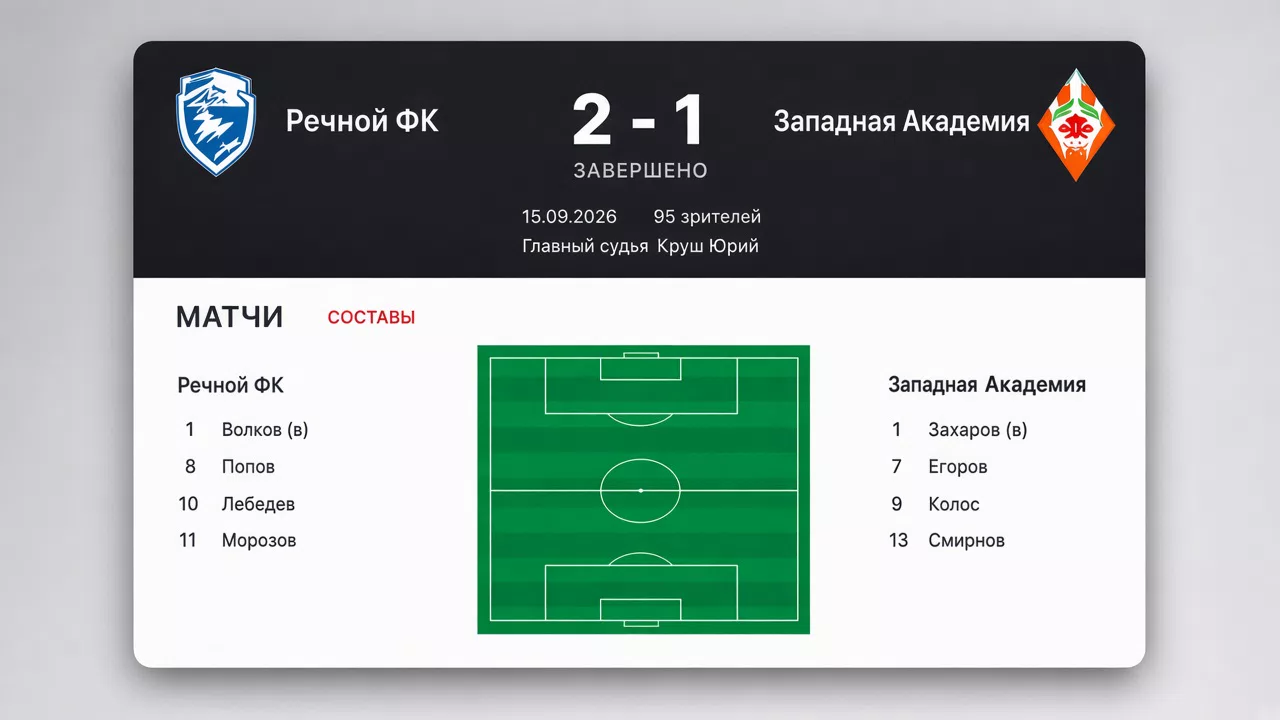
- match pages with lineups and history;
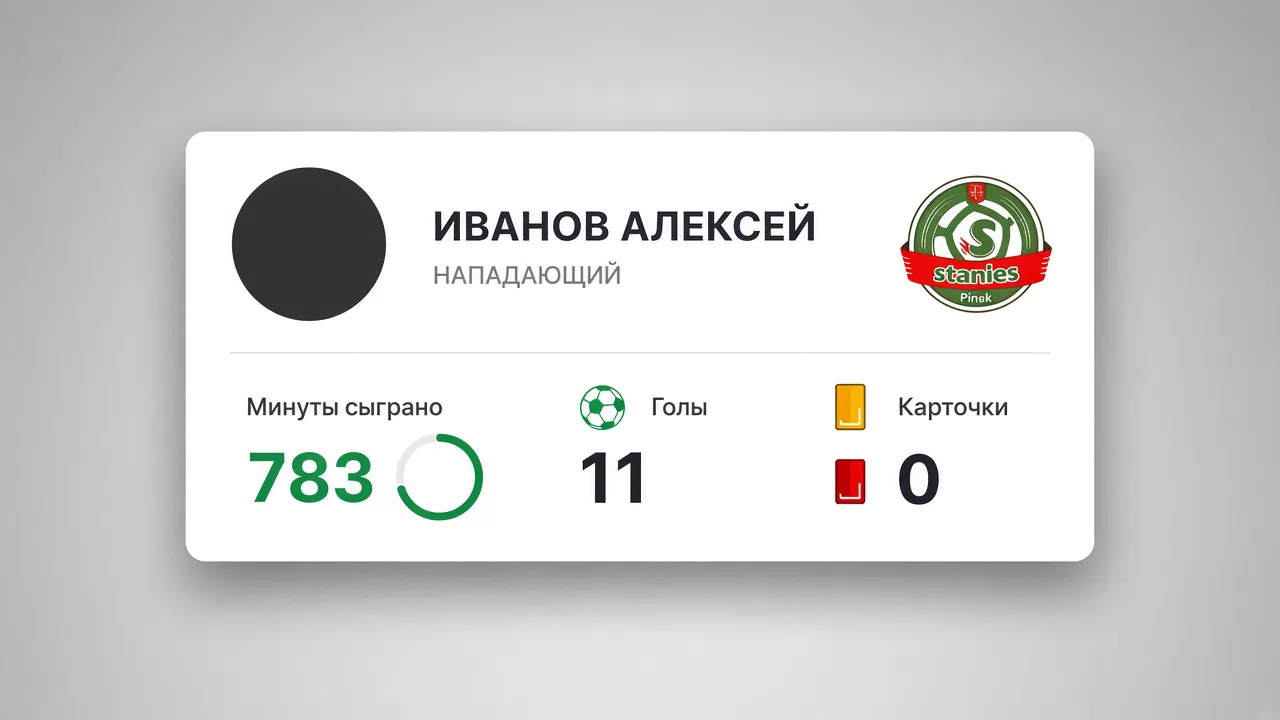
- player cards with statistics;
- federation structure, mass football, contacts.
In other words, the website became not a "business card" but a working information system for regional football.
2. Management system for tournaments, clubs, and players
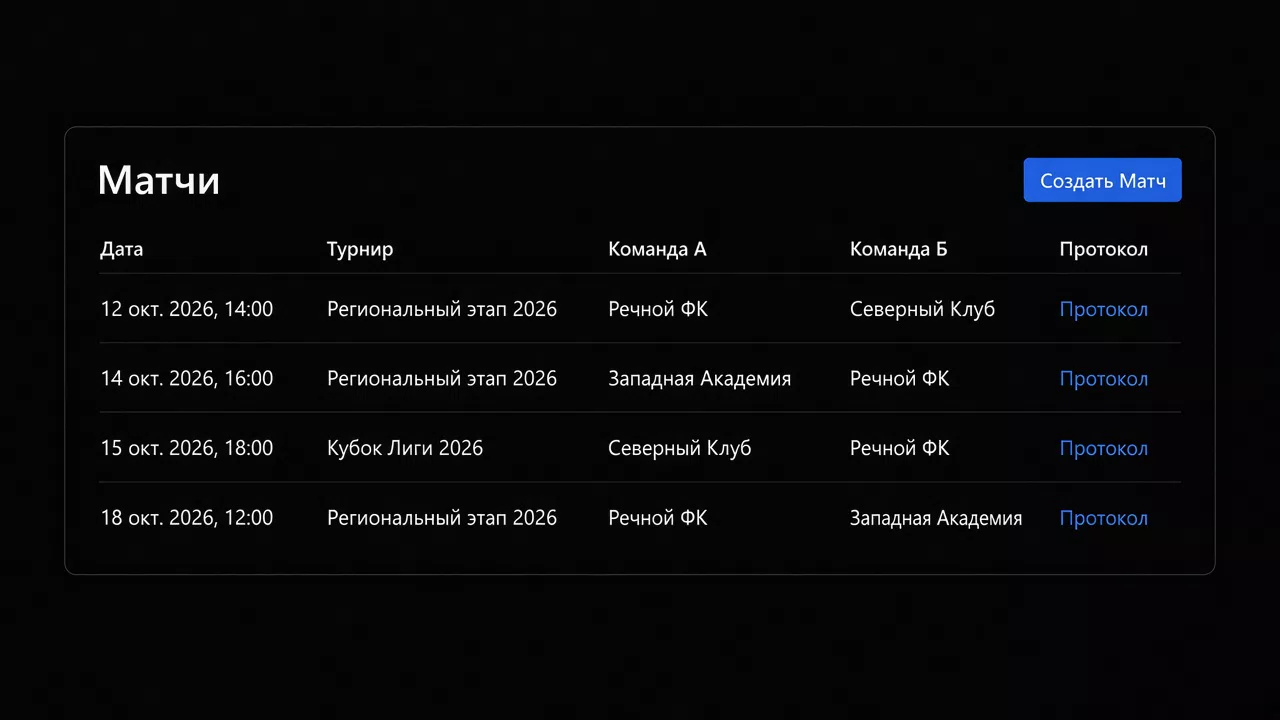
In parallel with the public side, we built an administrative system where the federation's editorial staff and operators manage sports data.
In the admin panel, specifically:
- news, banners, multimedia;
- federation structure and text sections;
- seasons, tournaments, rounds;
- matches and teams;
- player creation and management;
- fines / disciplinary workflow;
- an API block for external integrations.
This addressed the main pain point: data stopped living in spreadsheets, chats, and scattered files.
3. Integration with Comet
A separate workflow — integration with Comet — to pull in information about tournaments, matches, protocols, and related entities.
Why this is needed in practice:
- less manual entry;
- faster publication of results;
- fewer discrepancies between the protocol and the public showcase;
- a unified data flow for the website, player statistics, and standings.
It is precisely the combination of "admin panel + Comet + public website" that turns the project from a content portal into an operational platform for the regional stage.
How the product approach is structured
The key decision of the case is not to "reinvent the federation," but to reuse ABFF's mature base and narrow it down for the region.
What this delivered:
- faster time to production;
- lower cost compared to full custom;
- a familiar data model and UX aligned with the national ecosystem;
- the ability to immediately build the regional stage within a clear sports logic (season → tournament → round → match → protocol → statistics).
At the same time, the project remained an independent product for Brest: its own website, its own operational workflow, its own responsibility for the regional stage of the Second League.
What the client received
For the federation
- a working tool for managing tournaments, clubs, and players;
- automation of match information publication;
- a transparent structure of content and sports data;
- a foundation for further development (new seasons, disciplines, integrations).
For fans and participants
- up-to-date results and standings;
- match pages with lineups;
- player profiles and statistics;
- a unified digital "home" for Brest regional football.
For the ABFF ecosystem
- a replicable model: national platform → regional adaptation;
- a consistent UX between the association level and the regional level.
Key project decisions
- instead of building an expensive monolith from scratch, we agreed on collaboration with ABFF;
- we took the association's existing platform as a basis and stripped it of what was unnecessary for the region;
- we built the BOFF public website on the visual and structural model of
abff.by;
- we created a separate management system for tournaments, clubs, and players;
- we connected Comet for protocols, matches, and tournament data;
- we separated the confidential operational workflow (admin panel) from the public showcase.